Karachi is not the city that comes to mind when people discuss South Asian art. That conversation tends to happen in Mumbai, Delhi, or Lahore. This is an error of inattention. Karachi has, for decades, been producing painters, sculptors, photographers, filmmakers, and installation artists who rank among the most significant in Pakistan — and increasingly, in the region. The city's art ecosystem is just less curated for external consumption, more embedded in specific places and communities that require active seeking rather than passive stumbling. This guide is for the active seekers.
VM Art Gallery: The Institutional Anchor
VM Art Gallery in Clifton is Karachi's most established commercial gallery and the first stop for anyone serious about Pakistani contemporary art. Operating since 1990, VM has represented several generations of Pakistani painters and has built a secondary market record for artists like Imran Qureshi, Aisha Khalid, and the late Anwar Saeed. The gallery occupies a clean white-walled space on Khayaban-e-Ittehad in DHA, with regular openings that function as the city's most consistent arts social calendar.
Walk-in visitors are welcome during gallery hours (Tuesday–Saturday, 11am–7pm). The current show is always posted on their website and Instagram, and the secondary market viewing room — works by established artists held in inventory — is available by appointment and worth the extra step. This is where you understand what the Karachi market actually values.
Canvas Gallery: The Young Turks' Platform
A few kilometres north, Canvas Gallery on Khayaban-e-Muslim in DHA has built its reputation by taking risks on emerging artists that VM might not immediately platform. Canvas has been consistently early on careers that later broke at Art Dubai and beyond — the gallery's director has an eye for the tension between miniature painting traditions and contemporary conceptual practice that defines much of Karachi's most interesting new work. Monthly group shows, annual solo features, and a print market that makes ownership accessible at Rs. 5,000–25,000 for editioned works.
Koel Gallery and Cafe: Culture with Excellent Coffee
Koel Gallery in DHA Phase 6 occupies a converted home and functions as gallery, bookshop, and cafe simultaneously — which sounds like a lifestyle branding exercise but is actually a natural evolution of how Karachi's art community has always operated, in houses and informal spaces rather than institutional white cubes. The bookshop carries an unusually good selection of Pakistani art books, design monographs, and regional history. The gallery space shows a rotating programme tilted toward photography, printmaking, and mixed media.
The cafe is legitimately good — among the better flat whites in the city and a menu that changes seasonally. Go on a Saturday afternoon when the bookshop browsing crowd and the gallery visitors mix in ways that produce interesting conversations. Koel's Instagram is the most reliable single feed for tracking what is happening in Karachi's visual arts across all venues.
The Sadequain Murals at Frere Hall
No discussion of Karachi's public art is possible without the Sadequain murals inside Frere Hall. Completed in the 1960s and 1970s, these vast calligraphic ceiling paintings by Sadequain Naqvi — widely considered Pakistan's greatest visual artist of the 20th century — cover the interior of the main hall in a style that fuses Islamic geometric tradition with surrealist figuration and personal mythology. The scale is overwhelming. Sadequain painted poverty with the same intensity he brought to divinity, and the Frere Hall works cycle through both.
Entry to Frere Hall is free. The murals are best seen in morning light, when the windows illuminate sections that afternoon light flattens. Bring binoculars if you want to study the calligraphic details in the upper registers — the written text woven into the visual patterns is as much a part of the work as the figurative elements, and it rewards close reading.
Street Art in Saddar: The Unofficial Galleries
Saddar, Karachi's colonial-era commercial heart, has become over the last decade a canvas for ambitious street art that ranges from official municipal commissions to entirely unsanctioned interventions. The wall running along Ingle Road toward the old railway quarter contains a sequence of large-format murals — painted by an informal collective of artists who are mostly in their twenties — that address Karachi's history, displacement, water scarcity, and the precarious lives of the city's informal workers. None of it is signed. All of it is worth seeking.
The underpass at Numaish Chowrangi has been transformed by a municipal art programme into a formal gallery-in-transit — tile mosaics and painted panels depicting Karachi's neighbourhoods across time, from the fishing village of Kolachi through the colonial port to the contemporary megalopolis. Walk the length of it. The quality is uneven but the ambition is clear and several panels are genuinely moving.
Other Saddar Street Art Locations Worth Finding
- Burns Road corridor near the old cinema buildings: nostalgic Urdu film-poster-style murals referencing the golden age of Pakistani cinema
- Abdullah Haroon Road near the Press Club: political murals that change with sufficient regularity to reward return visits
- Arts Council of Pakistan exterior walls: rotating community projects, consistently the most formally ambitious of the public programmes
T2F — The Second Floor: Where the Conversation Happens
T2F (The Second Floor) in Bahadurabad is not a gallery — it is something harder to categorise and more important. Part bookshop, part performance space, part community centre, T2F has operated since 2007 as the city's most consistently serious venue for the intersection of art, literature, politics, and social thought. Poetry readings, documentary screenings, panel discussions, music performances, and art installations all happen here, often in the same week. The space itself is modest: a second-floor room with folding chairs, exposed brick, and a wall of books that doubles as a lending library.
Check T2F's Facebook and Instagram for their programme — events are typically Rs. 0–500 entry, and the audience represents a cross-section of Karachi's intellectual life that is genuinely unusual: academics, artists, journalists, NGO workers, students, and elders who have been coming since the beginning. The chai is good. The conversation after events sometimes runs two hours past closing time.
The Karachi Biennale: Watching for the Next Edition
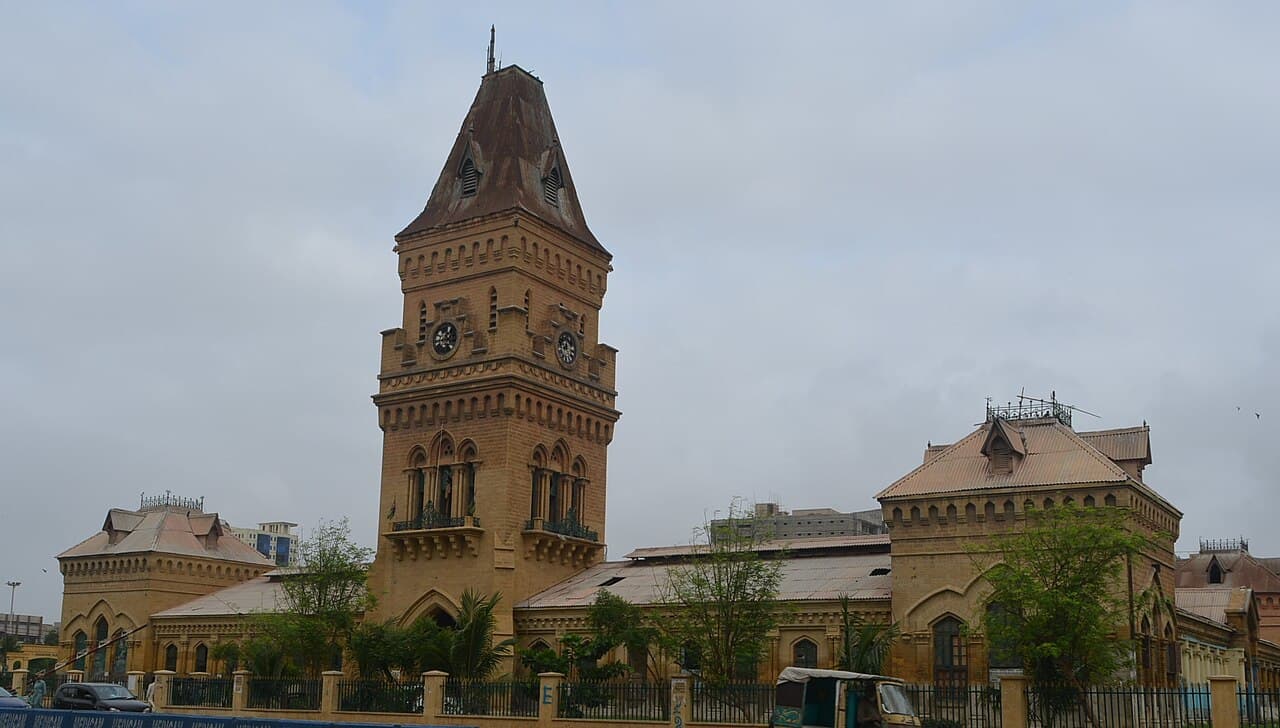
The Karachi Biennale has run in three editions (2017, 2019, 2022) and transformed how the city's art is seen internationally. The biennale model — site-specific works deployed across the city's heritage buildings, public spaces, and overlooked locations — produced installations at Mohatta Palace, the Karachi Port Trust waterfront, and the Empress Market complex that reframed those spaces for audiences who had passed them for years without looking. The next edition's timing is not yet confirmed, but the organisation's social channels are the place to watch. When it runs, it deserves a dedicated visit rather than a side trip — plan two to three days around it.
Mohatta Palace Museum: The Permanent Collection
Finally, Mohatta Palace in Clifton must be mentioned for any comprehensive account of Karachi's arts infrastructure. The palace — a 1927 pink sandstone building that was once the winter residence of a Marwari businessman and later the home of Fatima Jinnah — now operates as a museum and exhibition space. The permanent collection covers Pakistani art, decorative arts, and craft traditions. The temporary galleries host some of the most ambitious institutional shows in the city. The building itself is extraordinary: a hybrid of Rajput and Mughal architectural styles that Karachi has somehow preserved in near-original condition while the rest of the neighbourhood developed around it. Entry is Rs. 50. Open Tuesday–Sunday.