A useful Karachi museum day is not a race between display cases. It is a conversation between objects, buildings and the city outside: begin with a broad national collection, examine one civic landmark in detail, then choose a smaller second museum that answers a question raised earlier. This route keeps the day intellectually connected without pretending that Karachi's traffic or venue arrangements are predictable.
The plan is editorial, not an official itinerary. Confirm opening status, admission, photography rules and the exact entrance directly with each institution before leaving; none of those mutable details is fixed here.
At a glance
Start here
- Use the National Museum for broad chronology, then narrow the day to architecture, maritime history or biography.
- Treat Frere Hall and Burns Garden as historical evidence, not just pauses.
- Choose two major interiors, keep a third stop optional and verify every venue directly.
- Write down one question at each stop so the final comparison has a purpose.
01
Choose a thread before choosing stops
Start with one thread: how the region's material history is arranged, how a port shaped national life, or how public buildings acquired new uses. That decision prevents a day of unrelated rooms. For a first visit, the National Museum is the strongest opening anchor because its official description spans Indus material, Gandhara sculpture, Islamic art, miniature painting, coins, manuscripts, political history and an ethnological gallery. The same page says the museum moved from Frere Hall to its present Burns Garden premises in 1970, giving the day a built-in connection between collection history and civic architecture.
- Chronology thread: follow objects from early settlement to the modern state.
- Port thread: pair national collections with the Maritime Museum.
- Civic-memory thread: connect the museum's former home with Frere Hall and another protected building.
02
Read the National Museum selectively
Do not try to remember every label. Select three kinds of evidence: one object that shows technology or trade, one artwork or manuscript that shows an intellectual tradition, and one display about political or social identity. The official inventory is broad enough to support that method, including seals and material associated with Mohenjo-daro, ancient coins, manuscripts and belongings linked to national figures. The point is not to convert the collection page into a checklist; it is to notice how a national museum turns excavated objects, art and personal possessions into a sequence. Record where the sequence feels clear and where a later stop could complicate it.
Sources: Department of Archaeology and Museums, Government of Pakistan03
Use Burns Garden as a reset
After the galleries, pause before travelling. The museum's official page places the institution in Burns Garden on Dr Zia-ud-din Ahmed Road, so the setting belongs to the visit rather than serving as blank space between venues. Use the pause to compare the museum's national scale with the immediate city around it. Check current public access and conditions rather than assuming every part of the garden is available, and do not build the schedule around an unverified cafe, bench or facility.
Sources: Department of Archaeology and Museums, Government of Pakistan04
Connect Frere Hall to the museum story
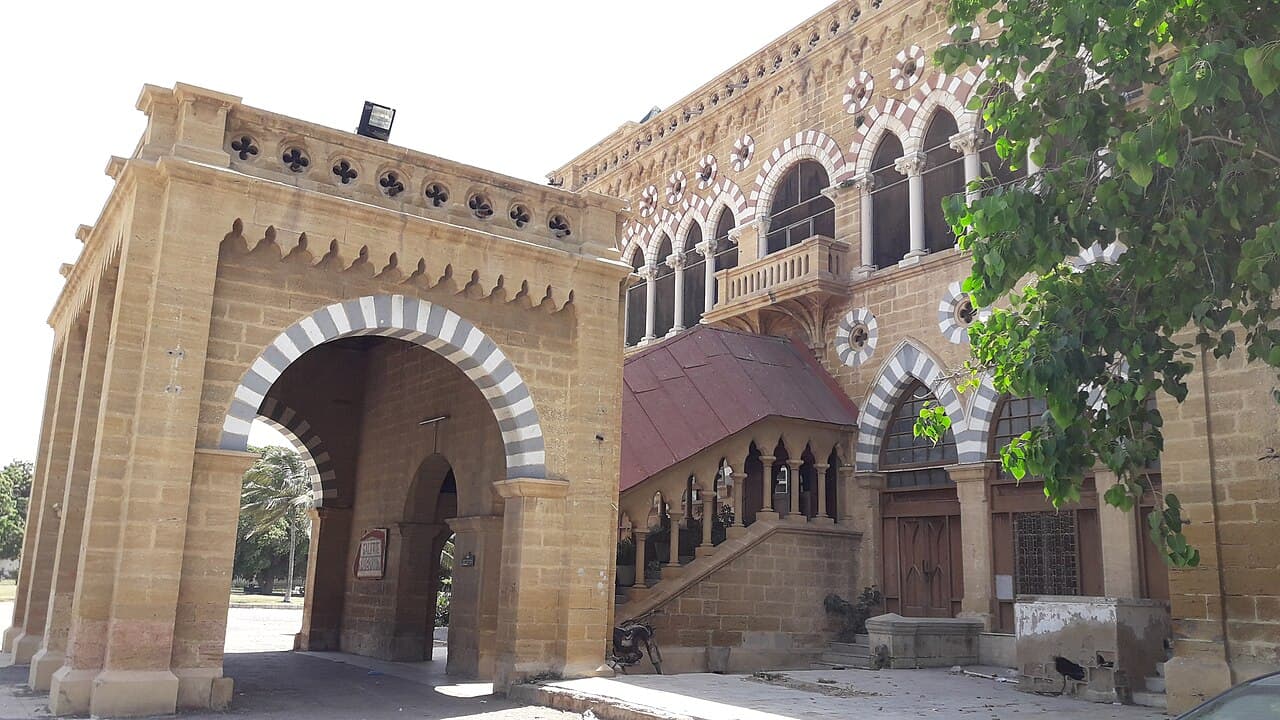
Frere Hall is the most meaningful architectural continuation because the National Museum began there in 1950. Sindh Antiquities describes the hall as an 1863 Venetian Gothic building designed by Lieutenant Colonel St Clair Wilson, using yellowish Karachi limestone with contrasting stone. Even if the interior is closed or occupied by an event, an exterior reading can examine the tower, verandahs, arches, stone colours and relationship between hall and surrounding open ground. Current access must come from the venue; the historical page's generic booking and support elements are not treated as reliable visitor hours.
Sources: Department of Archaeology and Museums, Government of Pakistan; Directorate General of Antiquities and Archaeology, Government of Sindh05
Choose one second museum, not three
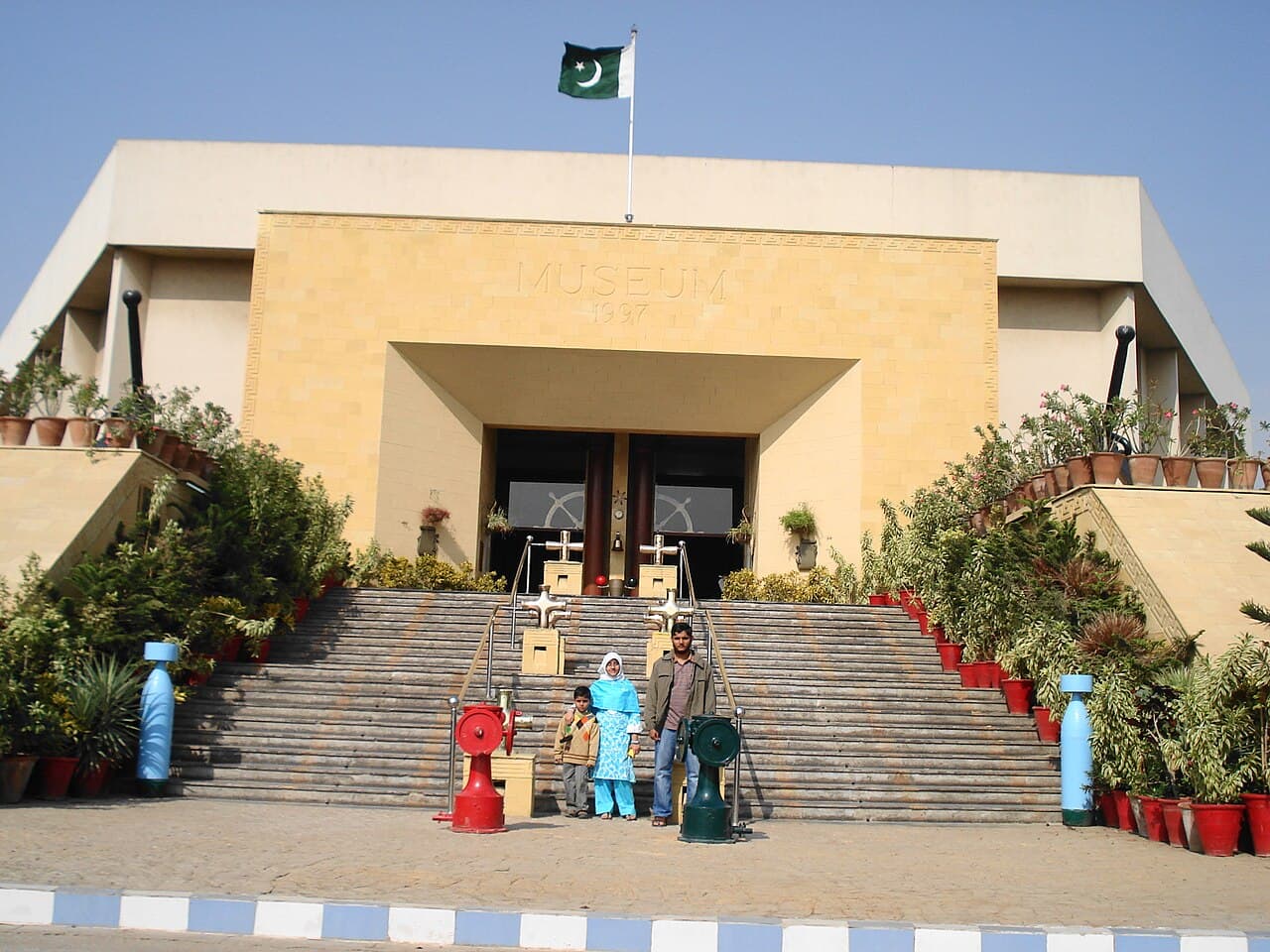
For a maritime thread, choose the Pakistan Maritime Museum. Its official exhibition page describes indoor and open-air displays, nine galleries, eleven displays, interactive kiosks, a library and a history-and-archive centre; its institutional page says the museum opened to the public in 1997. For a biographical and domestic-architecture thread, choose Quaid-e-Azam House Museum, which Sindh Antiquities identifies as the Flag Staff House at Shahrah-e-Faisal and Fatima Jinnah Road. These are different questions in different parts of the city. Pick one, confirm its current status, and let the unchosen museum become a future visit rather than a late-day transfer that empties both experiences of attention.
Sources: Pakistan Maritime Museum; Pakistan Maritime Museum; Directorate General of Antiquities and Archaeology, Government of Sindh06
Give each visitor a different looking job
Mixed-age groups stay engaged when everyone is not forced to process a museum in the same way. One person can find materials, another can trace movement, and another can look for how labels explain uncertainty. At the Maritime Museum, that might mean distinguishing an artefact from a model or mural. At the National Museum, it might mean comparing a coin, manuscript and sculpture as three kinds of evidence. These are editorial activities, not claims about museum programming. Ask staff before using pencils, photography or any activity near displays, and never touch an object or barrier unless the institution clearly invites interaction.
- Find one object whose material matters to its meaning.
- Find one label that links Karachi to a wider region.
- Choose one unanswered question to carry to the next stop.
07
Finish with a three-column note
End the day by separating object, institution and city. Under object, write what the material evidence showed. Under institution, note how the museum or heritage body arranged that evidence. Under city, identify what the surrounding building, road or garden added. This method keeps the National Museum, Frere Hall and the optional second museum distinct while still connected. It also makes uncertainty visible: a closed room, incomplete label or disputed story belongs in the notes as a question, not as a fact to be filled by memory. The result is a compact Karachi history lesson built from official collections and careful comparison, without claiming that one day exhausts the subject.
Useful answers
Reader questions
Can I fit all three museums into one day?
It may be physically possible on some days, but it weakens the route. Use the National Museum plus either the Maritime Museum or Quaid-e-Azam House, with Frere Hall as the connective heritage stop. Traffic and current access should decide the final plan.
Sources:Where was the National Museum first housed?
The Department of Archaeology and Museums says it was established at Frere Hall in 1950 and moved to its current Burns Garden premises in 1970.
Sources: Department of Archaeology and Museums, Government of PakistanIs the Maritime Museum only an outdoor display?
No. Its official exhibitions page describes both open-air exhibits and a three-floor museum building with galleries and other interpretive facilities. Verify which areas are open before travelling.
Sources: Pakistan Maritime MuseumAre listed hours and prices guaranteed?
No hours or prices in this guide are guaranteed. Official pages contain changing visitor details, so confirm directly with the institution shortly before the visit.
Sources:Read the evidence
Sources and further reading
These sources support the relevant sections above. Plans and comparisons are editorial suggestions. Check operators for current arrangements.
- National Museum of Pakistan, Karachi ↗Department of Archaeology and Museums, Government of Pakistan · Accessed 14 September 2026
The museum's location, history and described collection areas.
- Frere Hall, Karachi ↗Directorate General of Antiquities and Archaeology, Government of Sindh · Accessed 14 September 2026
Frere Hall's date, design attribution, style, materials and architectural features.
- Exhibitions ↗Pakistan Maritime Museum · Accessed 14 September 2026
The museum's indoor and open-air display format and listed facilities.
- About Us ↗Pakistan Maritime Museum · Accessed 14 September 2026
The museum's mission, construction background and 1997 public opening.
- QUAID-E-AZAM HOUSE MUSEUM, KARACHI ↗Directorate General of Antiquities and Archaeology, Government of Sindh · Accessed 14 September 2026
The house's alternate name, setting, building description and acquisition by Muhammad Ali Jinnah.